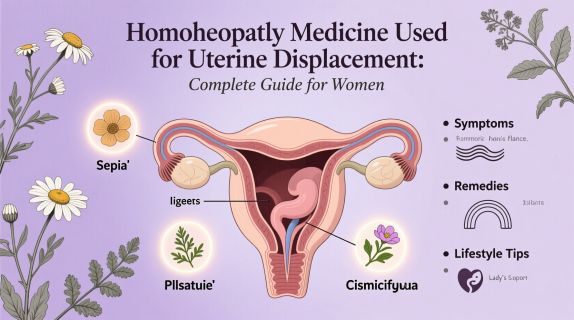
Homoeopathy Medicine Used for Uterine Displacement: A Complete
Uterine displacement—often known as prolapse, retroversion, anteversion, or malposition of the uterus—is a condition millions of women experience, especially after childbirth, menopause, or heavy physical labor. While modern medicine often uses surgery or hormonal treatment, many women worldwide look for natural, side-effect-free support like homoeopathy.
1. Introduction to Uterine Displacement.
Uterine displacement refers to any abnormal position of the uterus inside the pelvic cavity. The uterus may shift:
- Downward (Prolapse)
- Backward (Retroversion or Retroflexion)
- Forward (Anteversion)
- To one side (Lateral displacement)
Although this condition is common, many women silently struggle because of social stigma or lack of awareness.
1.1 Why Homoeopathy Is Considered Beneficial
Homoeopathy aims to treat:
- Structural weakness
- Hormonal imbalance
- Connective tissue laxity
- Emotional stress
- Pain and discomfort
The approach is holistic, non-invasive, and tailored to a person’s constitution.
1.2 Who Commonly Suffers from Uterine Displacement
Women at higher risk include:
- Those with multiple vaginal deliveries
- Heavy physical labourers
- Post-menopausal women
- Women with weak pelvic muscles
- Women with chronic constipation or chronic cough
2. Types of Uterine Displacement
Understanding the exact type helps in selecting the correct homoeopathic remedy.
2.1 Uterine Prolapse
The uterus descends into the vaginal canal due to weakness of pelvic muscles.
Symptoms:
- Feeling of something “coming down”
- Pelvic pressure
- Lower back pain
- Urinary leakage or difficulty
- Constipation
2.2 Uterus Retroversion
The uterus tilts backward toward the spine.
Symptoms:
- Backache during menses
- Pain during intercourse
- Heaviness in pelvis
2.3 Uterus Anteversion
Uterus bends too far forward.
Symptoms:
- Period cramps
- Bladder pressure
- Lower abdominal discomfort
2.4 Lateral Displacement
Uterus moves toward the right or left.
Symptoms:
- One-sided pelvic pain
- Irregular menses
- Pain during walking or bending
3. Major Causes of Uterine Displacement
Numbered list as requested:
3.1 Pregnancy and Childbirth
Multiple deliveries weaken pelvic ligaments.
3.2 Hormonal Changes
Low estrogen reduces ligament strength.
3.3 Heavy Weight Lifting
Increases intra-abdominal pressure.
3.4 Chronic Constipation
Straining pushes pelvic organs downward.
3.5 Chronic Coughing
Consistent pressure affects uterus position.
3.6 Obesity
Excess fat increases abdominal load.
3.7 Pelvic Injuries
Falls or accidents can shift uterine alignment.
3.8 Genetically Weak Connective Tissues
Some women naturally have lax ligaments.
4. Symptoms Every Woman Should Watch For
4.1 Pelvic Pressure or Heaviness
4.2 Dragging Pain in Lower Back
4.3 Difficulty Walking or Standing Long
4.4 Pain During Intercourse
4.5 Irregular Periods
4.6 Constipation or Painful Bowel Movements
4.7 Urinary Leakage or Urgency
4.8 Fatigue and Weakness
5. Homoeopathy: A Safe Path for Uterine Displacement
Homoeopathic physicians worldwide use specific remedies based on:
- Mental symptoms
- Physical constitution
- Exact type of displacement
- Severity of symptoms
Below begins the list of top evidence-supported remedies, which will continue in the following parts.
6. Top Homoeopathy Medicines for Uterine Displacement
6.1 Sepia – The Queen of Uterine Remedies
Sepia is one of the most frequently prescribed remedies for women’s pelvic health.
Why Sepia Is Used
- Heaviness in pelvis
- Feeling that “everything will fall out”
- Pain during intercourse
- Post-partum weakness
- Hormonal imbalance
- Irritability, indifference, emotional fatigue
Ideal Patient Profile
Women who:
- Feel better after vigorous exercise
- Feel worse when standing long
- Experience mood swings
- Feel exhausted after childbirth
6.2 Lilium Tigrinum – For Pelvic Dragging and Anxiety
Useful when:
- Uterus feels as if being pushed out
- Pain radiates from pelvis to thighs
- Strong urge to sit and cross legs tightly
- Emotional symptoms: fear, anxiety, restlessness
6.3 Murex Purpurea – When Libido Is Higher Yet Painful
Helps when:
- Pelvic organs feel sensitive
- Backache during menses
- Excessive sexual desire but painful intercourse
- Uterus tends to move downward
6.4 Pulsatilla – For Mild, Gentle, Emotionally Sensitive Women
Best when:
- Symptoms change frequently
- Back pain and uterine heaviness worsen in warm rooms
- Menses are irregular or scanty
- Patient prefers open air and sympathy
6.5 Sabina – For Uterine Pain with Bleeding Tendencies
Very effective when:
- Uterine displacement is associated with bleeding
- Pain moves from back to pubic area
- Clots in menstruation
