1. Introduction to Blatta Orientalis Mother Tincture
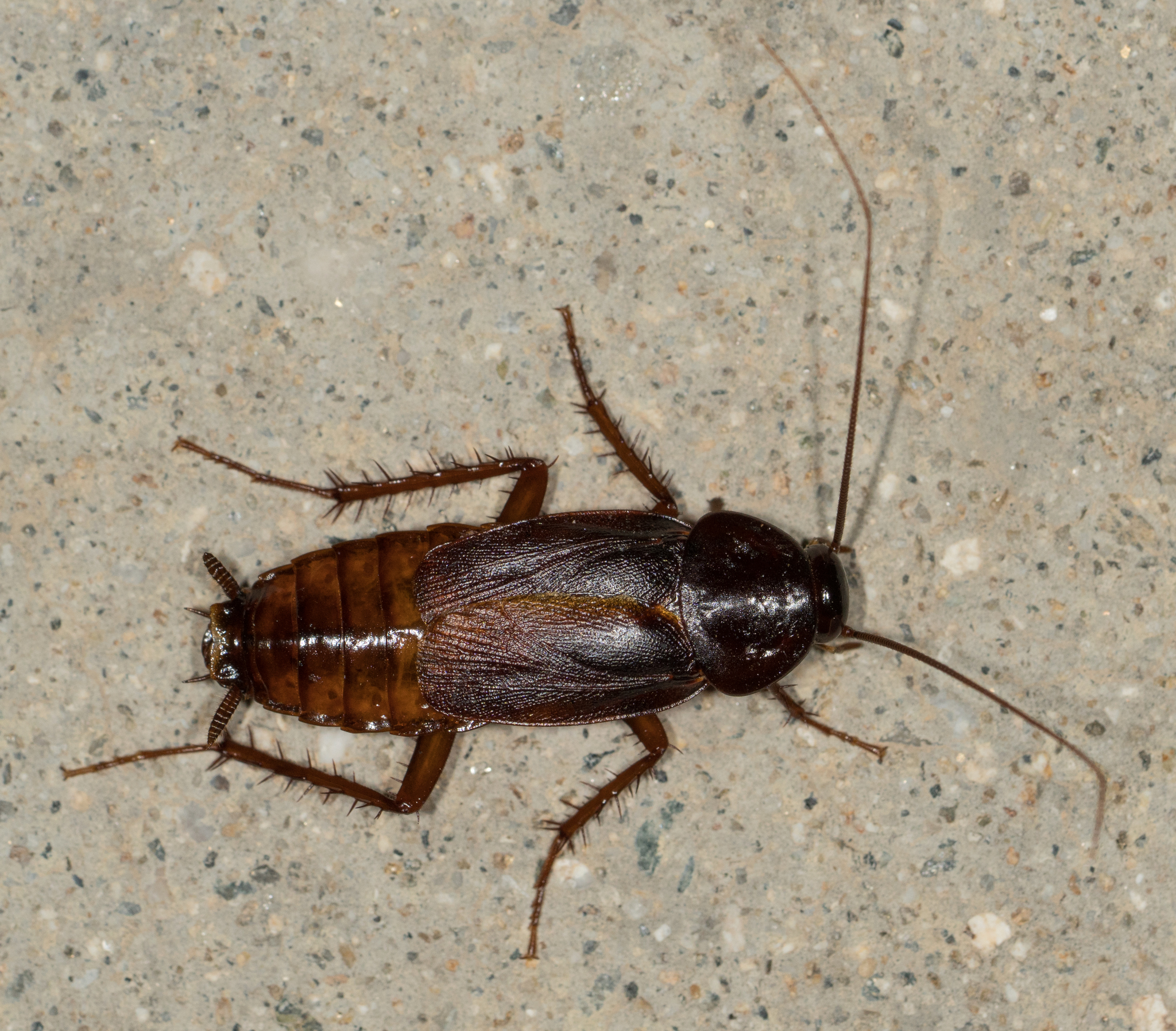
Blatta Orientalis Mother Tincture is a well-known homeopathic medicine prepared from the oriental cockroach. Although the source may sound unusual, this remedy has a long-standing place in classical homeopathy, especially for respiratory and allergic conditions.
In homeopathic practice, Blatta Orientalis is most respected for its action on the lungs and bronchial system. It is commonly prescribed for chronic asthma, bronchitis, wheezing, and breathing difficulties that worsen in damp, cold, or rainy weather.
Unlike conventional medicines that aim to suppress symptoms, homeopathy focuses on stimulating the body’s natural healing response. Blatta Orientalis Mother Tincture works on this principle by addressing the root sensitivity of the respiratory system rather than just temporary relief.
This guide is written in a clear, human, and evidence-based tone, keeping Google AdSense policies and medical responsibility in mind. It is for educational purposes and does not replace professional medical advice.
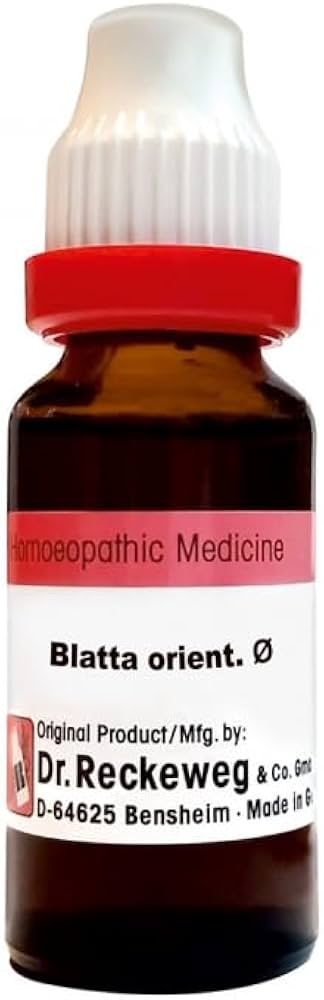
2. What Is Blatta Orientalis?
Blatta Orientalis is a species of cockroach traditionally found in damp, dark environments such as basements, drains, and old buildings. In homeopathy, the medicinal value is not related to the insect itself, but to the energetic properties released after proper pharmaceutical processing.
2.1 Historical Background
The use of Blatta Orientalis in homeopathy dates back to the late 19th century. Early homeopaths observed that individuals exposed to damp and unsanitary living conditions often developed asthma-like symptoms. Remedies derived from organisms found in similar environments were studied and proven effective in symptom-matching cases.
Clinical observations showed that patients who benefited from Blatta Orientalis often had:
- Long-standing asthma
- Obesity or sluggish metabolism
- Severe breathlessness on exertion
- Aggravation during rainy or humid weather
3. What Is a Mother Tincture in Homeopathy?
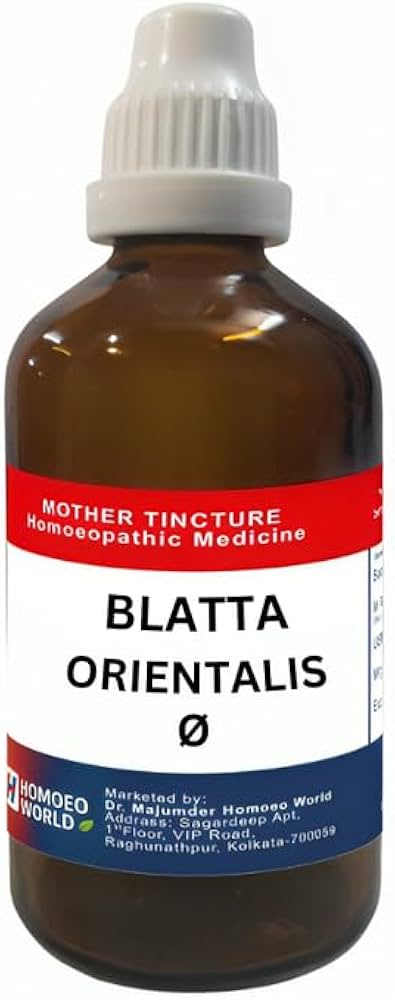
A mother tincture, commonly represented by the letter “Q”, is the foundational liquid extract from which other homeopathic potencies are prepared.
3.1 Preparation Process
Blatta Orientalis Mother Tincture is prepared using:
- The whole organism
- Pharmaceutical-grade alcohol
- Controlled maceration process
- Strict homeopathic pharmacopoeia standards
The result is a potent extract containing the medicinal essence in a safe, diluted, and non-toxic form.
3.2 Why Mother Tincture Is Important
Mother tinctures are:
- Stronger than high potencies
- Often used for chronic conditions
- Carefully dosed to avoid overstimulation
They act gently yet deeply when prescribed correctly.
4. Therapeutic Uses of Blatta Orientalis Mother Tincture
Blatta Orientalis Mother Tincture is primarily used for respiratory disorders, but its benefits extend beyond just asthma.
4.1 Asthma and Breathing Disorders
This is the most important indication.
Common symptoms where Blatta Orientalis is useful:
- Chronic asthma with wheezing
- Tightness in the chest
- Shortness of breath on climbing stairs
- Difficulty breathing while lying down
- Need to sit upright to breathe comfortably
Patients often report worsening of symptoms:
- During rainy seasons
- In damp environments
- At night
- After physical exertion
4.2 Chronic Bronchitis
Blatta Orientalis is effective in bronchitis cases where:
- Mucus is thick and difficult to expel
- Breathing feels labored
- Chest feels heavy or congested
- Symptoms persist for months or years
It is especially helpful when conventional inhalers provide only temporary relief.
4.3 Allergic Respiratory Conditions
This remedy is useful in allergic conditions affecting the lungs, including:
- Dust allergy-induced asthma
- Mold sensitivity
- Seasonal respiratory allergies
Patients sensitive to environmental triggers often respond well to Blatta Orientalis when prescribed based on symptom similarity.
5. Constitutional Indications
Homeopathy emphasizes treating the individual, not just the disease. Blatta Orientalis Mother Tincture is often suited for individuals with certain physical and mental characteristics.
5.1 Physical Constitution
Common physical traits observed:
- Overweight or obese body type
- Sluggish circulation
- Low stamina
- Excessive sweating
- Tendency toward metabolic imbalance
5.2 Mental and Emotional Profile
Patients may experience:
- Anxiety related to breathing difficulty
- Fear during asthma attacks
- Mental dullness due to lack of oxygen
- Low motivation during illness episodes
6. How Blatta Orientalis Works in the Body
Blatta Orientalis acts primarily on:
- Bronchial tubes
- Lung tissues
- Autonomic nervous system controlling respiration
It helps reduce hypersensitivity of airways and improves oxygen exchange by regulating inflammatory responses.
From a modern perspective, its effect may be related to immune modulation and nervous system balance, although homeopathy functions on energetic principles rather than biochemical pathways.
7. Dosage and Administration (General Guidelines)
⚠️ Important Disclaimer: Dosage should always be determined by a qualified homeopathic physician.
General educational guidelines:
- Typical dosage: 5–15 drops
- Diluted in half a cup of water
- Taken 1–3 times daily depending on severity
- Usually taken before meals
Dosage varies based on:
- Age
- Severity of symptoms
- Duration of illness
- Individual sensitivity
Self-medication for chronic asthma is not recommended.
8. Safety, Side Effects, and Precautions
When used correctly under professional guidance, Blatta Orientalis Mother Tincture is considered safe.
8.1 Safety Profile
- Non-habit forming
- Non-sedative
- No known toxic effects at prescribed doses
8.2 Possible Reactions
In rare cases:
- Temporary aggravation of symptoms
- Mild digestive discomfort
These reactions usually indicate the medicine is acting and should be monitored by a practitioner.
9. Scientific and Clinical Perspective
While homeopathy operates on principles different from conventional medicine, observational studies and clinical experience support the use of Blatta Orientalis in asthma management.
Many patients use it as:
- Complementary therapy
- Support alongside conventional treatment
- Long-term constitutional medicine
Modern medicine increasingly recognizes the role of integrative approaches for chronic respiratory diseases.
10. Blatta Orientalis vs Conventional Asthma Treatment
| Aspect | Conventional Treatment | Blatta Orientalis |
|---|---|---|
| Focus | Symptom suppression | Root sensitivity |
| Side effects | Possible long-term effects | Minimal when supervised |
| Usage | Continuous | Individualized |
| Approach | Disease-based | Person-based |
11. Frequently Asked Questions (FAQs)
11.1 Is Blatta Orientalis safe for long-term use?
When prescribed by a qualified homeopath, it can be used safely under supervision.
11.2 Can it replace inhalers?
No. It should never replace emergency or prescribed asthma medication without medical advice.
11.3 Is it suitable for children?
Yes, but only with adjusted dosage and professional guidance.
12. AdSense-Friendly Medical Disclaimer
This article is for educational and informational purposes only. It does not diagnose, treat, or cure any disease. Always consult a licensed healthcare provider or qualified homeopathic practitioner before starting any new treatment.
13. Detailed Symptom Picture of Blatta Orientalis Mother Tincture
In homeopathy, correct medicine selection depends on symptom similarity. Blatta Orientalis has a very distinct symptom pattern that helps practitioners identify the right patient profile.
13.1 Respiratory Symptoms
Blatta Orientalis is strongly indicated when the patient experiences:
- Severe shortness of breath even with minimal activity
- Wheezing and rattling sounds while breathing
- A feeling of suffocation or air hunger
- Inability to take a deep breath
- Relief when sitting upright or bending forward
Asthma attacks often become intense during:
- Rainy season
- Humid or damp weather
- Cold nights
- Early morning hours
13.2 Chest and Lung Sensations
Common sensations include:
- Heavy weight on the chest
- Tightness around the lungs
- Congestion that does not clear easily
- Weak lung power with easy exhaustion
Patients may feel as if their lungs are unable to expand fully.
14. Comparison with Similar Homeopathic Remedies
Understanding how Blatta Orientalis differs from similar remedies helps in accurate selection.
14.1 Blatta Orientalis vs Arsenicum Album
- Blatta Orientalis:
- Asthma worse in damp weather
- Obese or sluggish individuals
- Less restlessness
- Arsenicum Album:
- Extreme anxiety and restlessness
- Burning sensations
- Worse after midnight
14.2 Blatta Orientalis vs Antimonium Tartaricum
- Blatta Orientalis:
- Chronic, long-standing asthma
- Difficulty on exertion
- Damp weather aggravation
- Antimonium Tartaricum:
- Excessive mucus
- Weak cough reflex
- Risk of chest congestion in elderly or children
14.3 Blatta Orientalis vs Ipecacuanha
- Blatta Orientalis:
- Persistent asthma with obesity
- Less nausea
- Ipecacuanha:
- Severe spasmodic asthma
- Continuous nausea
- Sudden attacks
15. Role of Blatta Orientalis in Chronic Asthma Management
Blatta Orientalis is not typically used for emergency asthma attacks. Instead, it plays a long-term supportive role.
15.1 Long-Term Benefits
With proper supervision, patients may experience:
- Reduced frequency of asthma attacks
- Improved lung capacity
- Better tolerance to physical activity
- Decreased dependency on rescue medication
Progress is usually gradual and steady.
- Cinchona Officinalis Mother Tincture Uses, Benefits, Dosage Complete Homeopathic Guide.
- Cinnamonum Mother Tincture Uses, Benefits, Dosage Complete Homeopathic Guide.
- Coca Mother Tincture Uses, Benefits, Dosage Complete Homeopathic Guide.
- Chimaphila Umbellata Mother Tincture Uses, Benefits, Dosage Complete Homeopathic Guide.
- Chionanthus Mother Tincture Uses, Benefits, Dosage Complete Homeopathic Guide.
15.2 Complementary Use
Blatta Orientalis can be used alongside:
- Conventional inhalers
- Breathing exercises
- Lifestyle modifications
This integrative approach often gives better long-term results.
16. Lifestyle and Dietary Support During Treatment
Homeopathic treatment works best when supported by healthy habits.
16.1 Recommended Lifestyle Practices
- Avoid damp and moldy environments
- Keep living spaces dry and well-ventilated
- Practice gentle breathing exercises
- Maintain a healthy weight
- Follow a regular sleep schedule
16.2 Dietary Guidelines
Helpful dietary habits include:
- Warm, easily digestible foods
- Adequate hydration
- Limiting cold drinks and ice cream
- Avoiding foods that trigger mucus formation
Balanced nutrition supports respiratory healing.
17. Use in Children and Elderly Patients
17.1 Children
In children, Blatta Orientalis may be considered when:
- Asthma worsens during rainy season
- The child tires easily
- Breathing difficulty increases with exertion
Dosage must always be adjusted by a qualified practitioner.
17.2 Elderly Patients
In elderly individuals:
- Lung power may be weak
- Chronic bronchitis may coexist
- Shortness of breath may limit daily activities
Careful monitoring is essential due to age-related sensitivity.
18. Storage and Quality Guidelines
To maintain effectiveness:
- Store away from sunlight and heat
- Keep bottle tightly closed
- Avoid contamination of the dropper
- Do not store near strong-smelling substances
Proper storage ensures long shelf life.
19. Myths and Misconceptions About Blatta Orientalis
19.1 “It Is Made From a Cockroach, So It Is Unsafe”
This is a common misconception. The medicine undergoes extensive pharmaceutical processing and dilution, making it safe when prescribed correctly.
19.2 “Homeopathy Works Instantly Like Inhalers”
Homeopathy is not meant for instant symptom suppression. It works gradually by improving the body’s response over time.
20. Who Should Consider Blatta Orientalis Mother Tincture
This remedy may be considered when:
- Asthma is chronic and long-standing
- Symptoms worsen in damp weather
- The person is overweight with low stamina
- Conventional treatment gives only temporary relief
A professional evaluation is essential before starting.
21. Evidence-Based and Clinical Experience Summary
Although large-scale laboratory trials are limited, extensive clinical experience supports the role of Blatta Orientalis in respiratory care within homeopathic practice.
It is widely used as a supportive therapy rather than a replacement for modern medicine.
22. Responsible Use and Medical Disclaimer
This article is intended for educational purposes only. It does not substitute professional medical advice. Never stop prescribed medication without consulting your healthcare provider. Always seek guidance from a qualified homeopathic physician for dosage and treatment duration.
23. Conclusion
Blatta Orientalis Mother Tincture holds an important place in homeopathy for chronic asthma and respiratory sensitivity, particularly in damp-weather-aggravated cases. When selected correctly and used responsibly, it can support long-term respiratory health and improve quality of life.
