1. Introduction to Belladonna Mother Tincture
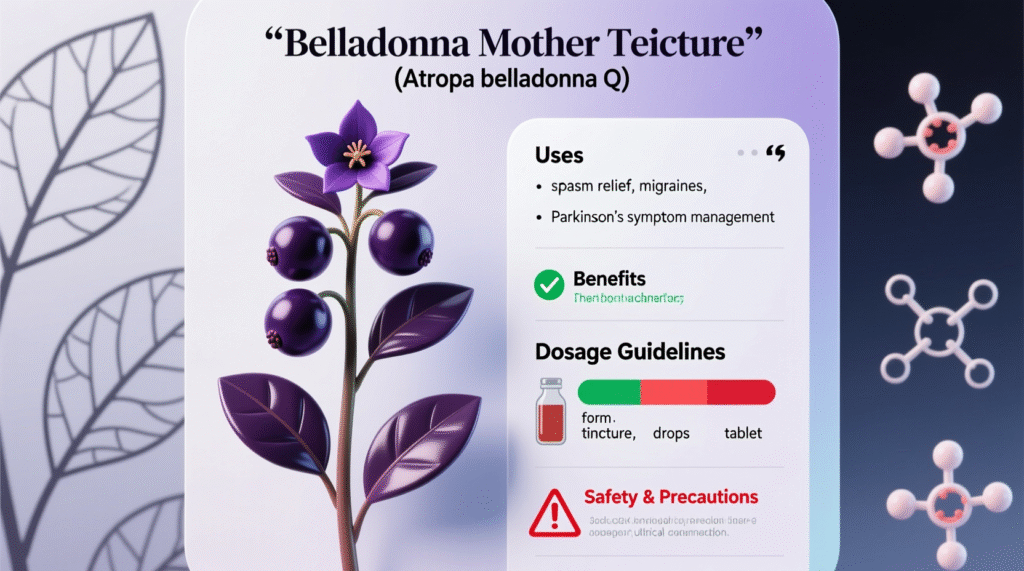
Belladonna Mother Tincture, commonly written as Belladonna Q, is a powerful and well-known preparation in homeopathy derived from the plant Atropa belladonna. The name “Belladonna” comes from Italian words meaning “beautiful lady,” referring to its historical cosmetic use, where women applied belladonna extracts to dilate pupils for a striking appearance.
In homeopathy, Belladonna Mother Tincture is valued not for cosmetic reasons, but for its action on acute, sudden, and intense conditions. It is often associated with inflammation, fever, throbbing pain, redness, heat, and sensitivity to light and noise.
This remedy is especially popular in homeopathic practice for conditions that appear suddenly and progress rapidly, making it one of the most frequently prescribed medicines worldwide.
2. Botanical and Scientific Background
2.1 Botanical Name and Family
• Botanical name: Atropa belladonna
• Common names: Deadly nightshade, Belladonna
• Family: Solanaceae
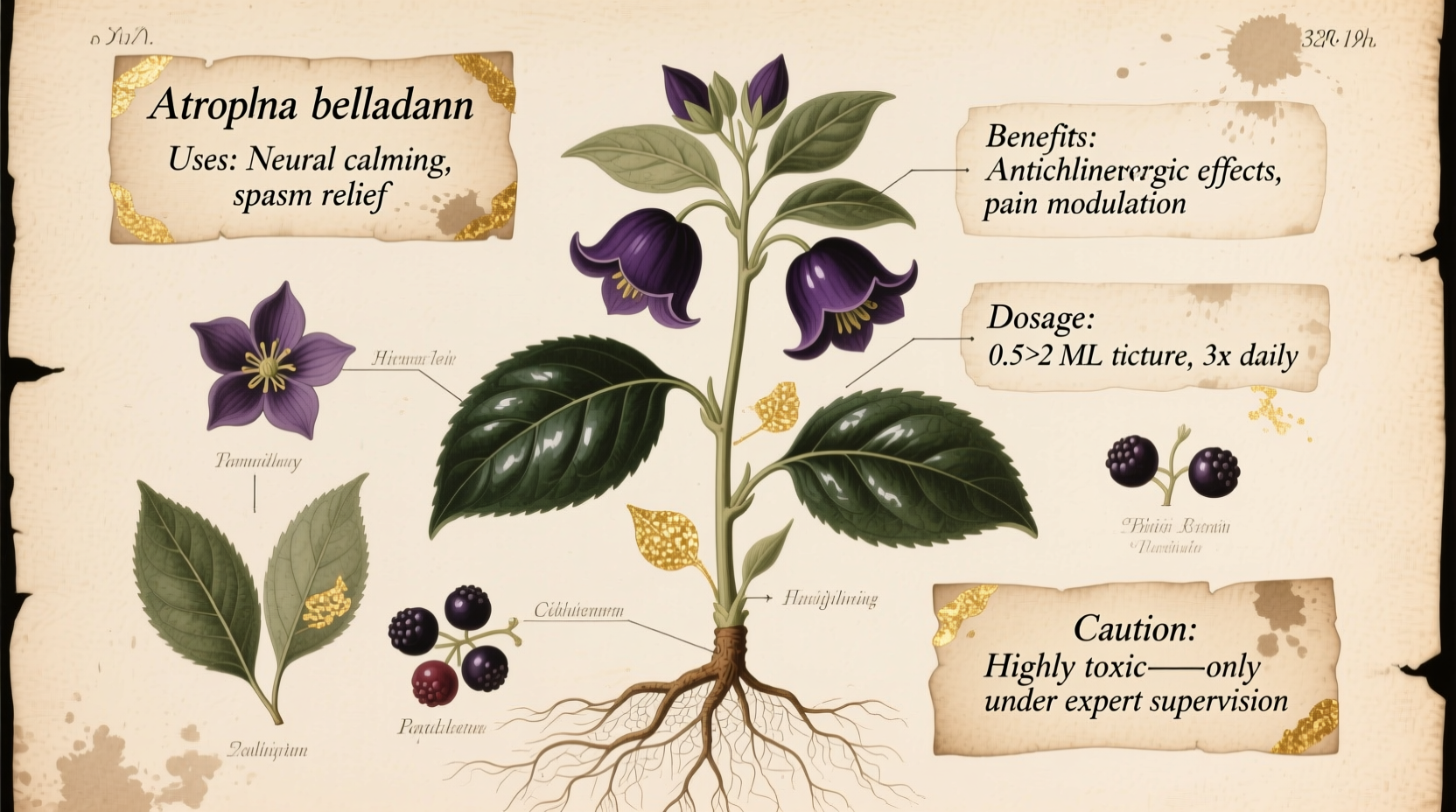
The plant is a perennial herb native to parts of Europe, North Africa, and Western Asia. It grows well in shady woodland areas and is recognized by its bell-shaped purple flowers and shiny black berries.
2.2 Active Chemical Constituents
Belladonna contains several potent alkaloids, including:
• Atropine
• Hyoscyamine
• Scopolamine
These compounds are responsible for its strong physiological effects. In conventional medicine, purified derivatives are used under strict medical supervision. In homeopathy, the mother tincture is prepared in a controlled, diluted form to ensure safety when used as directed.
- Cinchona Officinalis Mother Tincture Uses, Benefits, Dosage Complete Homeopathic Guide.
- Cinnamonum Mother Tincture Uses, Benefits, Dosage Complete Homeopathic Guide.
- Coca Mother Tincture Uses, Benefits, Dosage Complete Homeopathic Guide.
- Chimaphila Umbellata Mother Tincture Uses, Benefits, Dosage Complete Homeopathic Guide.
- Chionanthus Mother Tincture Uses, Benefits, Dosage Complete Homeopathic Guide.
3. What Is a Mother Tincture in Homeopathy?
A mother tincture is the base liquid extract prepared from fresh plant material, alcohol, or a hydro-alcoholic solution. It is labeled as “Q” or “Ø” in homeopathy.
Key characteristics of mother tinctures:
• Prepared from fresh plant parts
• Contain the full spectrum of plant constituents
• Used in small, controlled doses
• Can be taken directly or further diluted into potencies
Belladonna Mother Tincture is considered a foundational preparation, from which higher dilutions like 3X, 6X, 30C, etc., may be derived.
4. General Therapeutic Profile of Belladonna
Belladonna is best known for conditions that share these features:
• Sudden onset
• High intensity
• Redness and heat
• Throbbing or pulsating pain
• Dryness of skin or mucous membranes
• Sensitivity to light, sound, touch, and motion
This remedy is often described as acting like a “storm”—fast, fierce, and dramatic.
5. Major Uses of Belladonna Mother Tincture
5.1 Fever and Acute Infections
Belladonna is frequently used in early stages of fever, especially when:
• Fever comes suddenly
• Skin is hot, dry, and red
• Face appears flushed
• Head feels hot while hands and feet may be cold
• Patient is restless or delirious
It is often considered in viral or bacterial infections when symptoms escalate rapidly.
5.2 Headache and Migraine
Belladonna Mother Tincture is widely known for throbbing headaches. These headaches are often described as:
• Pulsating or hammering
• Worsened by light or noise
• Worse from movement or bending forward
• Associated with facial redness
Such headaches may originate from sinus congestion, fever, or vascular disturbances.
5.3 Inflammation and Redness
One of the hallmark uses of Belladonna is acute inflammation, especially when accompanied by:
• Redness
• Heat
• Swelling
• Pain
Common inflammatory conditions include:
• Tonsillitis
• Pharyngitis
• Otitis (ear pain)
• Conjunctivitis
The affected area often appears bright red and extremely sensitive.
5.4 Throat and Tonsil Conditions
Belladonna is commonly indicated in:
• Sudden sore throat
• Dry, burning throat pain
• Bright red tonsils
• Difficulty swallowing liquids
Pain may radiate to the ears, and symptoms tend to worsen at night.
6. Action on the Nervous System
Belladonna has a marked influence on the central nervous system. It is often considered when symptoms include:
• Sudden mental confusion
• Delirium during fever
• Hypersensitivity to external stimuli
• Irritability or agitation
In traditional homeopathic literature, Belladonna is associated with overstimulation of nerves and blood vessels.
7. Belladonna and Children
Belladonna Mother Tincture is often discussed in pediatric homeopathy, particularly for:
• High fever with sudden onset
• Red face and shining eyes
• Nighttime restlessness
• Sudden ear pain
However, due to the strength of the remedy, professional guidance is strongly advised before use in children.
8. Preparation Method of Belladonna Mother Tincture
The tincture is prepared using:
• Fresh leaves and flowering tops of Atropa belladonna
• Alcohol as the extraction medium
• Controlled maceration and filtration
The resulting liquid is dark, potent, and aromatic, containing measurable amounts of the plant’s alkaloids in regulated concentration.
9. Dosage Guidelines (General Information)
Typical general guidance (may vary by practitioner):
• Adults: 5–10 drops diluted in water, 1–2 times daily
• Acute cases: Short-term use under guidance
• Children: Reduced dosage only under professional supervision
Long-term or excessive use without guidance is not recommended.
10. Safety, Toxicity, and Precautions
Belladonna is known as “deadly nightshade” because raw plant parts are toxic. However, when prepared correctly and used responsibly in homeopathy:
• It is generally safe in prescribed doses
• Overuse may cause dryness, flushing, or palpitations
• Not recommended during pregnancy without medical advice
• Should be kept out of reach of children
Always consult a qualified practitioner for individualized advice.
11. Belladonna in Modern Homeopathy
Despite advances in modern medicine, Belladonna remains a cornerstone remedy in homeopathy due to its clear symptom picture and rapid action in acute cases. It continues to be included in homeopathic pharmacopeias across the world.
12. Organ-Wise Therapeutic Uses of Belladonna Mother Tincture
Belladonna Mother Tincture acts strongly on multiple organ systems. Its effects are rapid, intense, and well-defined.
12.1 Action on the Brain and Head
Belladonna is one of the most important remedies for acute cerebral congestion.
Key symptoms include:
• Sudden onset headache
• Throbbing or pulsating pain
• Sensation as if the head would burst
• Heat and redness of the face
• Intolerance to light, noise, and jarring
These headaches are often worse:
• In the afternoon or night
• From motion or bending
• From bright light
Belladonna headaches often accompany fever or inflammation.
12.2 Eyes and Vision Disorders
Belladonna has a marked effect on the eyes and optic nerves.
Common eye-related indications:
• Red, inflamed eyes
• Sensitivity to light
• Dilated pupils
• Sudden eye pain
• Dryness or burning sensation
It is frequently considered in early stages of conjunctivitis, especially when redness is intense and symptoms appear suddenly.
12.3 Ear Disorders
Belladonna Mother Tincture is widely used in acute ear complaints, especially in children.
Typical ear symptoms:
• Sudden earache
• Throbbing pain
• Pain radiating to the head
• Sensitivity to sound
• Redness and heat around the ear
Pain often worsens at night and may appear suddenly without warning.
12.4 Nose and Sinus Conditions
Belladonna is helpful in acute sinus congestion and nasal inflammation.
Common indications:
• Sudden nasal blockage
• Dryness of nasal passages
• Burning sensation
• Throbbing pain over sinuses
• Red, hot face
It is often indicated in early-stage sinus infections before discharge becomes thick or colored.
12.5 Throat and Mouth Conditions
Belladonna plays a major role in acute inflammatory throat disorders.
Key symptoms:
• Bright red throat and tonsils
• Dryness and burning pain
• Pain worse on swallowing liquids
• Sensation of constriction
• Pain radiating to ears
The throat appears shiny and inflamed, often with high fever.
12.6 Respiratory System
Belladonna affects the upper respiratory tract more than the lungs.
Indications include:
• Sudden dry cough
• Cough worse at night
• Tickling sensation in the throat
• Cough aggravated by movement
The cough is usually dry, spasmodic, and associated with fever.
12.7 Digestive System
Belladonna Mother Tincture is useful in acute gastrointestinal spasms.
Digestive symptoms include:
• Sudden abdominal pain
• Cramping or spasmodic pain
• Pain relieved by pressure
• Dry mouth
• Reduced secretions
It is more suited to sudden digestive disturbances rather than chronic digestive issues.
12.8 Urinary and Reproductive System
Belladonna is sometimes considered in acute urinary complaints.
Symptoms may include:
• Sudden urge to urinate
• Burning sensation
• Spasmodic bladder pain
In females, it may be indicated in sudden menstrual pain with heat and throbbing sensations.
13. Belladonna Fever Patterns Explained
Belladonna is one of the most important fever remedies in homeopathy.
Typical Belladonna fever characteristics:
• Sudden onset
• High temperature
• Dry, burning skin
• Red, flushed face
• Throbbing headache
• Restlessness or delirium
The patient may feel worse from covering and prefer a cool environment.
14. Mental and Emotional Symptoms
Belladonna has strong mental symptoms that help differentiate it from similar remedies.
Mental features include:
• Sudden irritability
• Confusion during fever
• Fearfulness
• Hypersensitivity
• Vivid hallucinations in high fever
These symptoms usually appear suddenly and disappear just as quickly.
15. Belladonna in Acute vs Chronic Conditions
Belladonna Mother Tincture is primarily an acute remedy.
Best suited for:
• Sudden illnesses
• Early stages of inflammation
• Rapidly progressing symptoms
Not typically indicated for:
• Long-standing chronic diseases
• Conditions with slow onset
• Cases with dull, passive symptoms
16. Comparison with Similar Homeopathic Remedies
Understanding comparisons improves accuracy.
16.1 Belladonna vs Aconite
Belladonna:
• Sudden onset with inflammation
• Red face, throbbing pain
• Heat and congestion
Aconite:
• Sudden onset after cold exposure
• Fear, anxiety, restlessness
• Dry skin without marked redness
16.2 Belladonna vs Ferrum Phosphoricum
Belladonna:
• High fever
• Bright redness
• Strong inflammation
Ferrum Phos:
• Mild fever
• Pale or slightly flushed face
• Early, less intense symptoms
16.3 Belladonna vs Chamomilla
Belladonna:
• Heat and redness
• Sensitivity to light and noise
Chamomilla:
• Extreme irritability
• Better when carried
• Pain with anger rather than heat
17. Scientific and Medical Perspective
From a scientific viewpoint:
• Belladonna contains atropine-like alkaloids
• These compounds affect the nervous system
• Conventional medicine uses derivatives under strict control
Homeopathy uses highly regulated dilutions and tinctures, emphasizing symptom similarity rather than chemical dosage.
18. Storage and Shelf Life
Proper storage ensures safety and effectiveness.
Guidelines:
• Store in a cool, dark place
• Keep bottle tightly closed
• Avoid contamination of dropper
• Keep away from direct sunlight
Shelf life is typically 3–5 years when stored properly.
19. Frequently Asked Questions (FAQs)
19.1 Is Belladonna Mother Tincture safe?
Yes, when used in recommended doses under guidance.
19.2 Can Belladonna be used daily?
It is usually intended for short-term or acute use.
19.3 Can it be used for children?
Yes, but only under professional supervision.
19.4 Is Belladonna addictive?
No, it is not habit-forming when used correctly.
20. Who Should Avoid Belladonna Mother Tincture?
Avoid or seek guidance if:
• Pregnant or breastfeeding
• History of heart rhythm issues
• Known sensitivity to Belladonna
• Using strong conventional medications
21. Practical Usage Tips
• Always dilute in water
• Do not self-medicate for prolonged periods
• Observe symptom changes carefully
• Stop use if unusual symptoms appear
22. Understanding Dosage Philosophy in Homeopathy
In homeopathy, dosage is not only about quantity but about timing, sensitivity, and symptom matching. Belladonna Mother Tincture is considered a strong remedy, so it is usually used carefully and for short durations.
Key principles behind Belladonna dosage:
• Use the lowest effective dose
• Prefer short-term use for acute conditions
• Stop once improvement begins
• Do not repeat unnecessarily
Unlike conventional medicines, repeating a dose too often may reduce effectiveness.
23. General Dosage Guidelines (Educational Use)
These are general educational guidelines, not a substitute for professional advice.
23.1 Adult Dosage
• 5 to 10 drops
• Mixed in half a cup of water
• Once or twice daily in acute conditions
23.2 Children’s Dosage
• 2 to 5 drops
• Always diluted in water
• Only under professional supervision
23.3 Duration of Use
• Acute conditions: 1–3 days
• Stop as soon as symptoms improve
• Avoid long-term continuous use
24. Belladonna in Emergency Homeopathy
Belladonna is often included in homeopathic emergency kits because of its fast action.
Common emergency-like situations where Belladonna is considered:
• Sudden high fever
• Acute sunstroke
• Sudden inflammation after exposure to heat
• Severe headache with flushed face
It is not a replacement for emergency medical care but may be used alongside professional guidance in early stages.
25. Educational Case Examples (Non-Clinical)
25.1 Case Example: Sudden Fever
A person develops sudden fever at night with a hot, dry skin and throbbing headache. The face is flushed, and light worsens discomfort. Belladonna is often discussed in such symptom patterns.
25.2 Case Example: Acute Ear Pain in a Child
A child wakes at night crying with sudden ear pain, red face, and sensitivity to sound. Such presentations are traditionally associated with Belladonna in homeopathic texts.
These examples are for educational understanding only.
26. Belladonna and Modern Lifestyle Triggers
Modern lifestyle factors that may trigger Belladonna-like symptoms include:
• Excessive screen exposure leading to headaches
• Heat exposure and dehydration
• Sudden stress causing vascular headaches
• Infections with rapid onset
Belladonna is often associated with sudden overstimulation of the body.
27. Myths and Facts About Belladonna Mother Tincture
Myth 1: Belladonna is always dangerous
Fact: Raw plant parts are toxic, but homeopathic preparations are regulated and safe when used correctly.
Myth 2: More drops work faster
Fact: Overuse may reduce effectiveness and increase unwanted effects.
Myth 3: Belladonna cures all fevers
Fact: It is indicated only when symptom patterns match Belladonna characteristics.
28. Belladonna in Combination with Other Remedies
In classical homeopathy, remedies are usually used one at a time. However, in practice, Belladonna may be alternated with other remedies under guidance in specific situations.
Commonly discussed companion remedies (educational context):
• Aconite – fear-driven sudden onset
• Ferrum Phos – mild early inflammation
• Hepar Sulph – later stages with pus
Self-combination without guidance is not advised.
29. Signs That Belladonna Is Working
Positive response indicators include:
• Reduction in heat and redness
• Decrease in throbbing pain
• Calmer mental state
• Improved sleep
Once improvement starts, stop repeating the dose.
30. When to Stop or Seek Medical Help
Stop use and seek medical advice if:
• Symptoms worsen or persist
• Unusual dryness, palpitations, or confusion occurs
• High fever does not respond
• Condition becomes severe
Homeopathy complements but does not replace conventional care when needed.
31. Belladonna Mother Tincture and AdSense-Friendly Use
From a content and compliance perspective:
• Avoid disease cure claims
• Emphasize traditional and educational use
• Include safety disclaimers
• Encourage professional consultation
Such balanced content aligns well with AdSense approval guidelines.
32. Ethical and Responsible Use
Responsible use means:
• Understanding limitations
• Respecting potency
• Avoiding self-diagnosis
• Using under qualified supervision
Belladonna is powerful and should be treated with respect.
33. Final Summary and Key Takeaways
Belladonna Mother Tincture is one of the most important acute remedies in homeopathy, known for its action on sudden, intense, inflammatory conditions.
Key points to remember:
• Best for sudden onset symptoms
• Characterized by heat, redness, and throbbing pain
• Acts rapidly in acute stages
• Not meant for chronic, long-term use
• Safe when used responsibly
34. Conclusion
Belladonna Mother Tincture remains a cornerstone of homeopathic practice due to its clear symptom picture and rapid response. When used thoughtfully and with proper guidance, it continues to play an important role in managing acute inflammatory conditions in a holistic framework.
