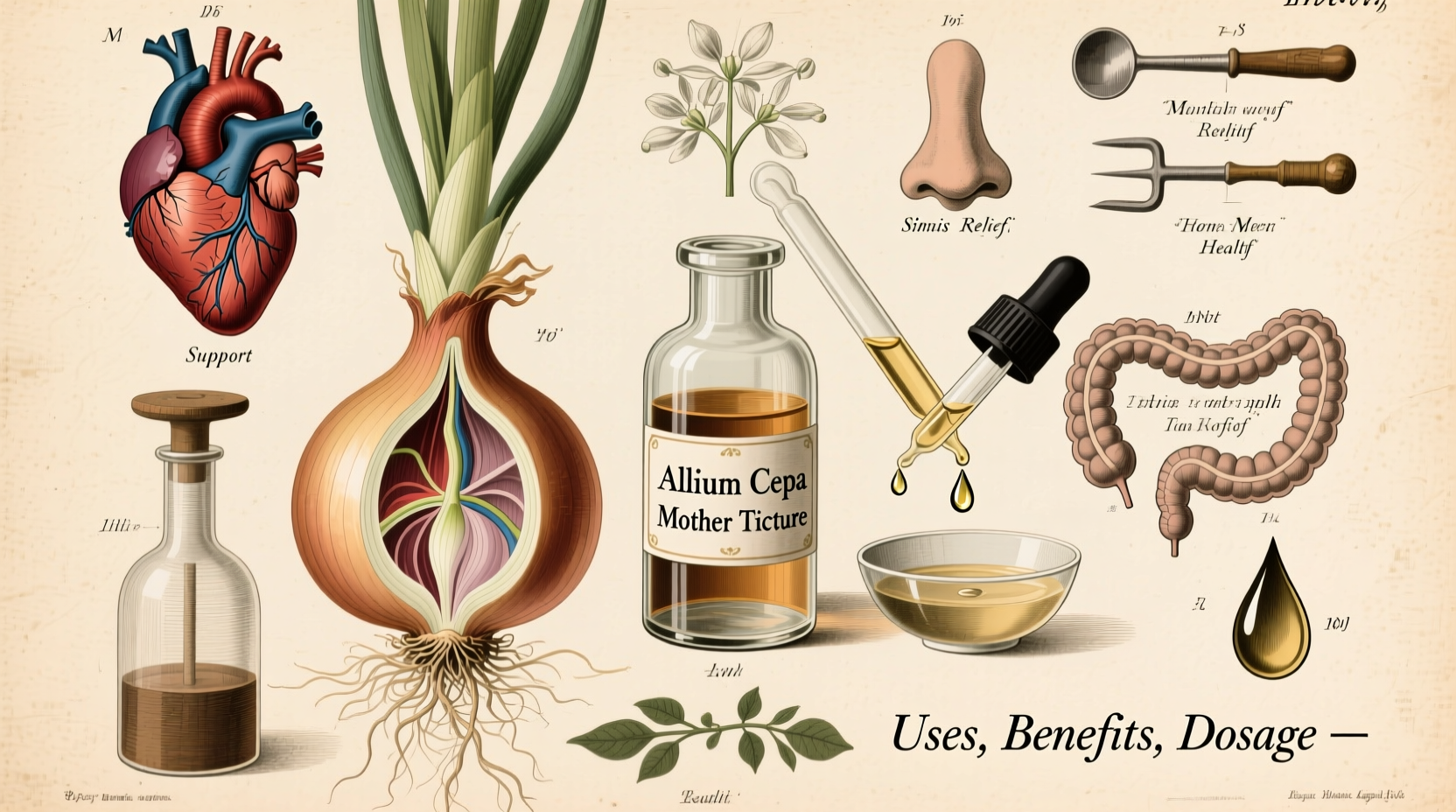
1. Introduction to Allium Cepa Mother Tincture
Allium Cepa mother tincture is a widely used homeopathic medicine prepared from fresh red onion (Allium cepa). In everyday life, onion is known for causing tears, a burning sensation in the eyes, and irritation in the nose when cut. Homeopathy uses this same principle therapeutically, following the law of “like cures like.”
In homeopathic practice, Allium Cepa mother tincture is primarily prescribed for cold, flu, allergic rhinitis, hay fever, watery eyes, sneezing, and nasal discharge. It is especially effective when symptoms resemble the reaction one experiences while cutting an onion.
This remedy has been in use for more than a century and is included in classical homeopathic texts such as Materia Medica by Boericke and Clarke, making it one of the most trusted medicines for respiratory and allergic conditions.
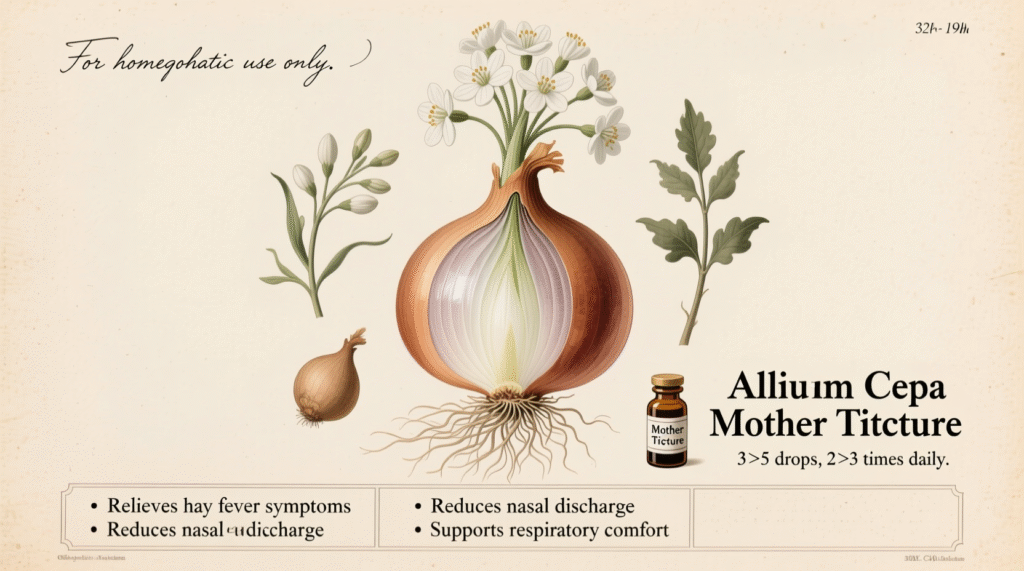
2. Botanical and Scientific Background of Allium Cepa
Allium Cepa belongs to the Amaryllidaceae family, the same family as garlic and leeks. It is cultivated worldwide and has a long history of medicinal use in both traditional and modern medicine.
Key botanical facts:
- Scientific name: Allium cepa
- Common name: Onion
- Plant part used: Fresh bulb
- Preparation: Alcoholic extraction (mother tincture)
From a scientific perspective, onion contains biologically active compounds such as:
- Quercetin
- Sulfur-containing compounds
- Flavonoids
- Antioxidants
These compounds are known to have anti-inflammatory, antimicrobial, and immune-modulating effects, which explains why onion-based remedies are helpful in respiratory conditions.
3. What Is a Mother Tincture in Homeopathy?
A mother tincture, commonly represented as Q, is the original liquid extract obtained from a plant, mineral, or animal substance. It forms the base from which other potencies like 6C, 30C, or 200C are prepared.
Characteristics of mother tinctures:
- Highly concentrated
- Acts faster than higher dilutions
- Often used in acute and functional disorders
- Usually taken in drops diluted in water
Allium Cepa Q retains more of the plant’s natural biochemical properties, making it suitable for both acute symptoms and chronic tendencies under professional guidance.
4. Principle of Action of Allium Cepa
The action of Allium Cepa is centered on the mucous membranes, especially of the:
- Nose
- Eyes
- Throat
- Upper respiratory tract
It produces:
- Profuse watery nasal discharge
- Burning and irritation
- Continuous sneezing
- Red, watery eyes
When a patient experiences similar symptoms during illness, Allium Cepa becomes the remedy of choice.
5. Primary Uses of Allium Cepa Mother Tincture
5.1 Allium Cepa for Cold and Coryza
Allium Cepa is one of the most effective remedies for acute cold, especially in the early stages.
Typical symptoms include:
- Watery nasal discharge like running water
- Burning sensation in the nose
- Frequent sneezing
- Symptoms worse in warm rooms
- Relief in open air
Unlike some colds, the discharge is non-thick and non-yellow in the beginning.
5.2 Allium Cepa for Allergic Rhinitis and Hay Fever
This remedy is widely prescribed for seasonal allergies and hay fever, especially when symptoms worsen during spring or pollen season.
Common allergy symptoms:
- Intense sneezing spells
- Watery eyes with mild burning
- Nasal irritation
- Headache due to congestion
Patients often report improvement when moving outdoors, which is a keynote indication for Allium Cepa.
5.3 Allium Cepa for Watery Eyes and Eye Irritation
Allium Cepa is particularly useful when:
- Eyes are red and watery
- Tears cause mild burning
- Eye discharge is non-sticky
- Light sensitivity is present
It is often prescribed when eye symptoms accompany cold or allergy.
- Cinchona Officinalis Mother Tincture Uses, Benefits, Dosage Complete Homeopathic Guide.
- Cinnamonum Mother Tincture Uses, Benefits, Dosage Complete Homeopathic Guide.
- Coca Mother Tincture Uses, Benefits, Dosage Complete Homeopathic Guide.
- Chimaphila Umbellata Mother Tincture Uses, Benefits, Dosage Complete Homeopathic Guide.
- Chionanthus Mother Tincture Uses, Benefits, Dosage Complete Homeopathic Guide.
6. Emotional and Mental Symptoms Indicating Allium Cepa
Though primarily a physical remedy, Allium Cepa also shows some mental associations:
- Mild irritability due to discomfort
- Difficulty concentrating during cold
- Restlessness caused by continuous sneezing
- Desire for fresh air
These mental states are usually secondary to physical suffering.
7. Dosage of Allium Cepa Mother Tincture
General dosage (commonly recommended):
- 10–15 drops in half a cup of water
- 2 to 3 times daily
For acute conditions:
- Dose may be repeated every 2–3 hours for a short period
- Reduce frequency as symptoms improve
⚠️ Dosage should always be adjusted by a qualified homeopathic practitioner, especially for children, elderly patients, or pregnant women.
8. Duration of Use
- Acute cold or allergy: 3–7 days
- Chronic allergic tendency: Several weeks under supervision
Long-term self-medication is not recommended without professional advice.
9. Safety, Side Effects, and Precautions
Allium Cepa mother tincture is generally safe when taken in prescribed doses.
Possible precautions:
- Avoid overdose
- Not recommended during pregnancy without consultation
- Keep away from strong flavors like coffee, tobacco, or mint
Side effects are rare but may include:
- Temporary aggravation of symptoms
- Mild stomach irritation in sensitive individuals
10. Difference Between Allium Cepa Q and Other Potencies
| Aspect | Mother Tincture (Q) | 30C / 200C |
|---|---|---|
| Concentration | High | Ultra-diluted |
| Action | Faster, physical | Deeper, constitutional |
| Usage | Acute conditions | Chronic tendencies |
| Supervision | Recommended | Essential |
11. Scientific Perspective and Research Insights
Modern studies have shown that onion extracts possess:
- Anti-allergic properties
- Anti-inflammatory effects
- Immunomodulatory activity
Quercetin, a major compound in onion, is known to stabilize mast cells and reduce histamine release, which scientifically supports the traditional use of Allium Cepa in allergic conditions.
12. Who Should Consider Allium Cepa Mother Tincture?
This remedy is particularly suitable for:
- People suffering from recurrent colds
- Seasonal allergy sufferers
- Individuals with sensitivity to dust or pollen
- Patients whose symptoms improve in fresh air
13. Detailed Symptom Profile of Allium Cepa
Understanding the symptom picture is essential in homeopathy. Allium Cepa is selected not just for a disease name, but for a specific pattern of symptoms.
13.1 Nasal Symptoms
The nasal symptoms of Allium Cepa are very characteristic and easy to recognize.
Key nasal indications:
- Profuse, watery nasal discharge
- Discharge is irritating and burning
- Continuous dripping from the nose
- Sneezing in rapid succession
- Nose feels raw and sore
A very important point is that the nasal discharge burns the nose but does not burn the eyes.
13.2 Eye Symptoms
Allium Cepa has a strong affinity for the eyes, especially when eye symptoms appear along with cold.
Common eye symptoms:
- Redness of eyes
- Profuse watery tears
- Mild burning sensation
- Sensitivity to light
- Eyelids may appear swollen
Unlike nasal discharge, eye discharge is usually non-irritating.
13.3 Throat and Respiratory Symptoms
Allium Cepa also acts on the throat and upper respiratory tract.
Typical throat symptoms:
- Raw, scratchy feeling
- Tickling in the throat
- Hoarseness of voice
- Dry cough from throat irritation
Cough is usually worse in warm rooms and better in open air.
14. Modalities of Allium Cepa (What Makes Symptoms Better or Worse)
Modalities play a crucial role in remedy selection.
14.1 Symptoms Worse From:
- Warm rooms
- Evening time
- Rest
- Strong odors
- Closed or stuffy environments
14.2 Symptoms Better From:
- Open air
- Cool environment
- Gentle movement
- Fresh breeze
These modalities clearly help differentiate Allium Cepa from other cold remedies.
15. Comparison with Similar Homeopathic Remedies
To use Allium Cepa correctly, it is important to distinguish it from similar medicines.
15.1 Allium Cepa vs Euphrasia
- Allium Cepa:
- Nasal discharge is burning
- Eye discharge is mild
- Euphrasia:
- Eye discharge is burning
- Nasal discharge is mild
This difference is a classic comparison taught in homeopathy.
15.2 Allium Cepa vs Arsenicum Album
- Allium Cepa:
- Watery discharge
- Better in open air
- Less anxiety
- Arsenicum Album:
- Thick or watery discharge
- Burning everywhere
- Anxiety and restlessness
- Worse after midnight
15.3 Allium Cepa vs Natrum Muriaticum
- Allium Cepa:
- Acute cold
- Profuse watery discharge
- Frequent sneezing
- Natrum Muriaticum:
- Chronic colds
- Dryness after discharge stops
- Emotional sensitivity
16. Use of Allium Cepa Mother Tincture in Children
Allium Cepa is often prescribed for children suffering from:
- Recurrent colds
- Seasonal allergies
- School-going infections
Safe pediatric considerations:
- Lower dose as advised by a doctor
- Always dilute well in water
- Avoid self-prescribing for infants
Children who constantly wipe a running nose and sneeze repeatedly often respond very well to Allium Cepa.
17. Use in Elderly Patients
Elderly individuals frequently suffer from:
- Reduced immunity
- Seasonal respiratory issues
- Chronic allergic rhinitis
Allium Cepa mother tincture can be helpful when symptoms match, but:
- Dose should be reduced
- Alcohol sensitivity must be considered
- Medical supervision is recommended
18. Chronic Conditions Where Allium Cepa May Help
Although primarily an acute remedy, Allium Cepa can support chronic conditions such as:
- Recurrent allergic rhinitis
- Seasonal sinus irritation
- Chronic watery colds
In such cases, mother tincture is often combined with higher potencies under professional guidance.
19. Homeopathic Philosophy Behind Allium Cepa
Homeopathy does not suppress symptoms. Instead, it stimulates the body’s natural healing response.
Allium Cepa works by:
- Mimicking disease symptoms
- Triggering immune regulation
- Supporting mucosal balance
This approach explains why symptoms may briefly intensify before improving, known as a homeopathic aggravation.
20. Storage and Shelf Life of Allium Cepa Mother Tincture
To maintain potency:
- Store in a cool, dark place
- Avoid direct sunlight
- Keep bottle tightly closed
Shelf life is typically:
- 3 to 5 years if stored properly
Always check manufacturer details.
21. How to Take Allium Cepa Mother Tincture Correctly
Best practices:
- Take on a clean mouth
- Avoid food 15 minutes before and after
- Dilute drops in water
- Use a plastic or glass spoon
Avoid strong substances like coffee or tobacco during treatment.
22. Common Mistakes While Using Allium Cepa
- Using it for thick yellow discharge
- Continuing after symptoms change
- Overdosing for faster results
- Ignoring modalities
If symptoms change, remedy selection must change as well.
23. Frequently Asked Questions (FAQs)
Can Allium Cepa cure cold permanently?
It helps relieve symptoms but does not permanently cure susceptibility unless part of constitutional treatment.
Is it safe for daily use?
Only for short periods unless advised by a practitioner.
Can it be taken with allopathic medicines?
Yes, generally safe, but spacing doses is recommended.
